Affiliate disclosure: As an Amazon Associate, wellwateractionplan.com earns from qualifying purchases. When you click links on this site and make a purchase, we may earn a commission at no additional cost to you. Read our full affiliate disclosure.
Well water prevention technology has evolved beyond basic test strips and simple filters. Here’s what’s worth knowing about.
- Smart continuous monitors provide real-time alerts between formal lab tests.
- Smart treatment system monitoring reduces missed maintenance items.
- Newer filtration media can target specific contaminants more effectively than older generic media.
- These technologies improve monitoring convenience but don’t replace fundamental lab testing for definitive results.
Smart Water Quality Monitors
Newer continuous water quality monitors track parameters like pH, hardness, and sometimes specific contaminant indicators in real time, connecting to smartphone apps for alerts if readings shift outside normal ranges — useful for catching gradual changes between formal lab tests.
Treatment System Monitoring
Many current filtration and softener systems include smart monitoring for filter life remaining, salt levels, and system performance, reducing the chance of a maintenance item being missed or forgotten.
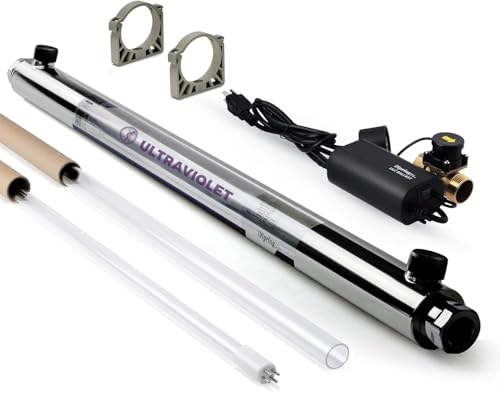
Improved Filtration Media
Newer filtration media formulations target specific contaminant categories (certain PFAS compounds, for example) more effectively than older generic activated carbon alone — worth discussing with a water treatment professional if your test results show specific contaminants of concern.

What a Continuous Monitor Is Actually Measuring
The gap between what these devices measure and what a well owner wants to know is the thing to understand before buying one. Most consumer continuous monitors read general surrogates such as conductivity, total dissolved solids, turbidity, temperature or pH. Those are genuinely useful as change detectors, because a sudden shift away from an established baseline suggests something has altered and is worth a real test.
What they do not do is identify or quantify a specific contaminant. Conductivity rising tells you dissolved material went up; it does not say whether that material is harmless mineral or arsenic, and a monitor reporting nothing unusual provides no assurance about an analyte it was never measuring. Read the specification for the list of parameters rather than the marketing claim about water safety.
Subscriptions, Calibration and the Life of a Connected Device
Connected equipment brings ownership costs that unconnected equipment does not. Sensors drift and need periodic calibration or replacement, alerting often depends on a cloud service that may carry a subscription, and the device needs power and a working network connection to do the one job it was bought for. A monitor that is offline during the week something changes has contributed nothing.
There is a longer-term risk worth weighing as well, which is that the useful life of the hardware can be shorter than its physical life. If a manufacturer discontinues an app or shuts down a service, a working sensor can lose the function it was purchased for. Keeping the periodic certified laboratory test in the plan regardless means none of that leaves you without a way to find out what is in the water.
Match the Technology to the Contaminant, Not to the Category
EPA’s contaminant catalog is organized by contaminant and by the impacts associated with it, which is the order a purchasing decision has to follow[1]. A device is effective against particular substances and not against others, so the laboratory result comes first and the equipment choice second. Buying a general-purpose filter before knowing what is in the water is the common failure, and it is a quiet one: the water can taste noticeably better while the contaminant of actual concern passes through untouched.
Protection at the Wellhead Comes Before Treatment Downstream
EPA’s guidance on protecting a home’s water puts the emphasis on keeping contamination out of the well in the first place, through the condition of the casing, the seal at the wellhead and the management of nearby land use[2]. None of that is replaced by a treatment device, because a system installed downstream only addresses water that has already entered the well. Where a state sets construction or separation requirements, EPA’s state program directory points to the agency that publishes them[3], and that local figure is the one to follow.
FAQ
Are smart water quality monitors a replacement for lab testing?
No — they’re useful for trend monitoring and catching gradual changes between formal tests, but lab testing remains the definitive method for specific contaminant confirmation.
If my continuous monitor shows no alerts, does that mean the water is safe?
No. Consumer monitors generally track general indicators such as conductivity, turbidity or pH rather than specific contaminants, so they cannot report on an analyte they do not measure. Treat them as change detectors that prompt a laboratory test, not as a substitute for one.
Can a whole-house filter substitute for fixing the wellhead?
No. Treatment addresses water that has already entered the well, while wellhead protection addresses whether it enters at all, and EPA’s guidance treats the two as separate measures[2].
New technology improves monitoring convenience but doesn’t change the fundamental need for periodic certified lab testing.
References
- Potential Well Water Contaminants and Their Impacts. U.S. Environmental Protection Agency
- Protect Your Home's Water. U.S. Environmental Protection Agency
- Private Drinking Water Well Programs in Your State. U.S. Environmental Protection Agency
These statements have not been evaluated by the Food and Drug Administration. This information is not intended to diagnose, treat, cure, or prevent any disease. Content is for informational purposes only and is not medical advice; consult a qualified healthcare provider before starting any supplement. As an Amazon Associate we earn from qualifying purchases.
