Top Picks
These are the products we currently recommend, chosen from what we have reviewed across the site. Each pick lists what it is good for and who it suits, so you can match one to your situation rather than defaulting to the cheapest listing.
As an Amazon Associate we earn from qualifying purchases. This does not change what you pay.

A private well has no utility running quarterly panels for you, so the first number is on you. This covers the common well parameters and includes two bacteria vials, which is the one result strips alone cannot give you.

Strips tell you whether to worry. A certified lab tells you what is actually in the water and at what concentration, which is the only evidence that supports a treatment decision or holds up in a transaction. For a private well, EPA points you to your state’s certification programme rather than to any EPA lab certification: states certify the laboratories, and EPA approves the analytical methods they run. A state-certified lab running EPA-approved methods is the pairing to look for.

A TDS reading will not identify a contaminant, but it takes five seconds and costs nothing to repeat, so a sudden shift tells you when it is time to run a real test. That is its actual job.

Well water carries sand and grit that will destroy every filter downstream of it. This one flushes clean with a valve instead of being replaced, so it protects the expensive stages without becoming a running cost.

Specified for well as well as city supply, which matters because a system designed only for municipal water assumes someone else already removed the sediment and killed the bacteria. On a private well nobody did.
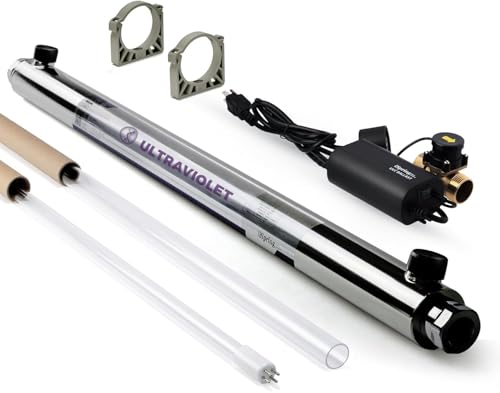
Filtration does not kill bacteria. Ultraviolet does, without adding anything to the water, which is why it is the standard answer for a private well that keeps failing its coliform test.