Affiliate disclosure: As an Amazon Associate, wellwateractionplan.com earns from qualifying purchases. When you click links on this site and make a purchase, we may earn a commission at no additional cost to you. Read our full affiliate disclosure.
If you’re having a new well drilled, prevention is far easier to build in correctly than to fix later.
- Request documentation confirming casing depth and grouting meet state standards.
- Ensure proper wellhead grading, sanitary cap, and setback compliance.
- Test immediately after well completion for a baseline reference point.
- Building in proper construction standards is far easier than correcting deficiencies later.
Proper Casing and Grouting
Request documentation confirming casing depth and grouting meet or exceed your state’s minimum standards, since these directly affect surface contamination entry risk for the life of the well.
Wellhead Protection
Ensure proper surface grading directs water away from the wellhead, a sanitary well cap is installed, and setback distances from septic systems, livestock areas, and property lines meet or exceed state minimum requirements.
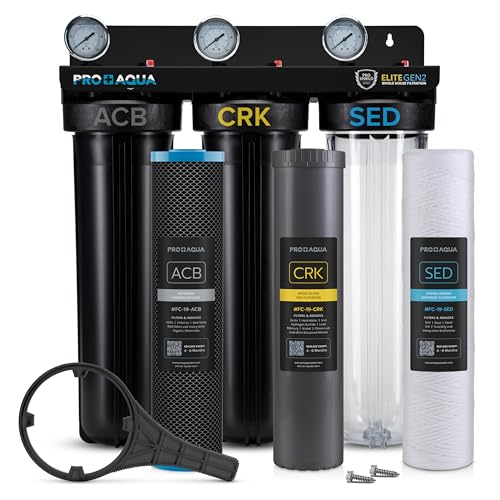
Baseline Testing
Test immediately after well completion to establish your baseline water quality before any household use begins, giving you a clear reference point for all future comparisons.
Siting Comes Before Every Other Decision
Nothing you specify later fully compensates for a well in the wrong place. EPA states the requirement plainly: the well should be located so that rainwater flows away from it, because rainwater picks up bacteria and chemicals at the land surface and water pooling near the well can seep in[2]. It also notes that appropriate well construction depends on local geologic and groundwater conditions, and points owners to the state water-well contractor licensing agency, the local health department or a local water system professional for guidance on what proper construction means where you are[2].
On a new build this is a scheduling problem as much as a technical one. Final grading, driveway placement, septic layout and outbuildings are usually decided after the well is drilled, and each can change how surface water moves across the site. Raising drainage at the siting conversation, rather than at landscaping, is the cheapest version of this fix by a wide margin.
Know Which Well Type You Are Buying
EPA distinguishes three types and their contamination profiles directly. Dug or bored wells are shallow, roughly ten to thirty feet, have a large diameter, and are not cased continuously. Driven wells are cased continuously but shallow, roughly thirty to fifty feet, and EPA notes they can be contaminated easily because they draw from aquifers near the surface. Drilled wells can be much deeper, require casing, and EPA describes them as having a lower risk of contamination because of their depth and continuous casing[2].
That is a useful frame for a new construction conversation, because depth and continuous casing are specification decisions with a stated contamination consequence, not merely cost decisions. If a shallower option is being proposed on price, the trade being made is the one EPA describes.
The Components Worth Naming in the Contract
EPA describes the parts that do the protecting, which is the vocabulary to use when asking for documentation. Casing maintains the well opening from the target groundwater to the surface and, together with grout, keeps dirt and excess water out, preventing less desirable groundwater from mixing with the drinking water; EPA notes some states and local agencies set minimum casing lengths by law[2].
Well caps sit on top of the casing to keep debris, insects and small animals out and include a vent to control pressure during pumping[2]. Well screens attach to the bottom of the casing to limit sediment entry[2]. A pitless adapter keeps the pipe carrying water to the surface below the frost line, maintaining a sanitary and frost-proof seal[2].
Asking for each of these by name, with the state minimum it was built to, is what converts a general request for quality into something checkable on a completion report years later.
Verify the Contractor and Capture the Baseline
EPA advises making sure water-well drillers and pump installers are bonded and insured, and licensed and certified where the state requires it, and points to the National Ground Water Association both for finding certified contractors and for its own voluntary certification program on top of state requirements[2].
Then capture the baseline while the well is new and unused. EPA's annual recommendation for private wells is total coliform bacteria, nitrates, total dissolved solids and pH[1], and running exactly that panel at completion gives every later result something to be compared against. EPA separately advises testing immediately when new construction or land disturbance occurs near a well[1], which on a building site means the baseline is worth repeating once the site work is genuinely finished rather than only on the day the driller leaves.
FAQ
What documentation should I get after a new well is drilled?
Request the well completion report showing depth, casing, grouting details, and yield — this becomes important reference documentation for the life of the well.
Is a deeper drilled well really less likely to be contaminated?
EPA describes drilled wells as having a lower contamination risk due to their depth and use of continuous casing, and notes that shallow driven wells can be contaminated easily because they draw from aquifers near the surface[2].
When should the baseline test be run on a brand new well?
At completion, before household use, using the coliform, nitrate, total dissolved solids and pH panel EPA recommends[1]. It is worth repeating once site work finishes, since EPA treats nearby new construction and land disturbance as a reason to test immediately[1].
State minimum standards vary — confirm your specific state’s well construction requirements with your local health department.
References
- Protect Your Home's Water. U.S. Environmental Protection Agency
- Learn about Private Water Wells. U.S. Environmental Protection Agency
These statements have not been evaluated by the Food and Drug Administration. This information is not intended to diagnose, treat, cure, or prevent any disease. Content is for informational purposes only and is not medical advice; consult a qualified healthcare provider before starting any supplement. As an Amazon Associate we earn from qualifying purchases.
